
Switch Audience
Using an AI assistant
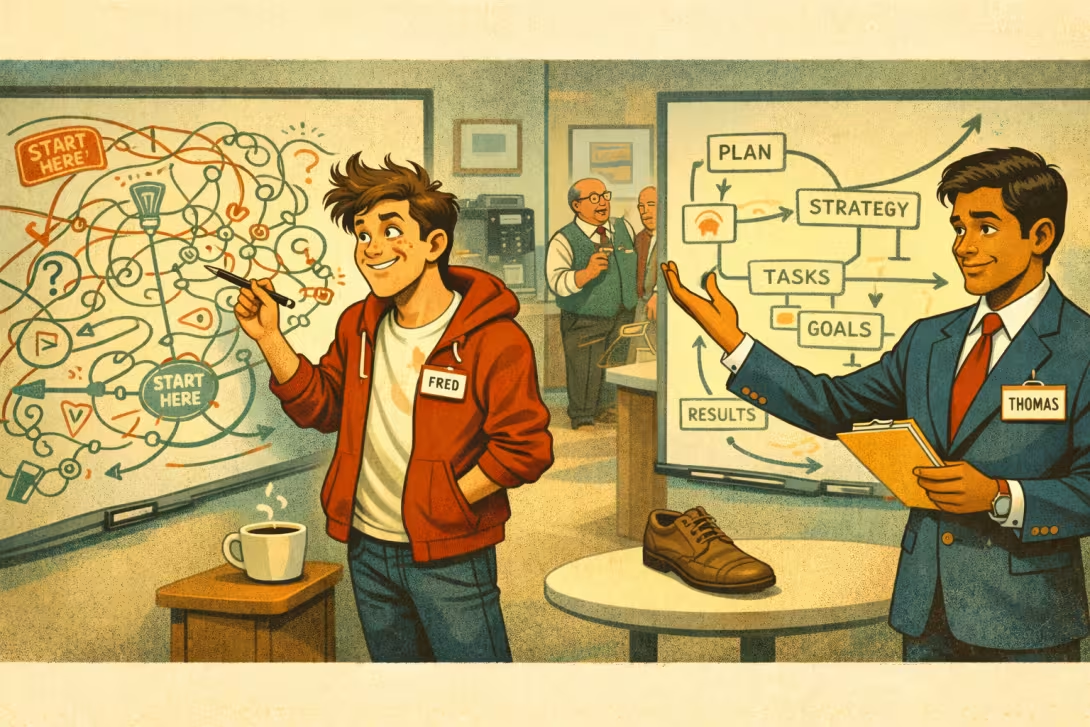
At some point in the life of every organization that has a website, someone suggests bringing in a consultant. Maybe the site is broken and nobody knows why. Maybe there's a feature that needs building and the board wants it done right. Maybe the organization has been down this road before — handed the whole project to a vendor, paid a significant sum, and ended up with a website that only the vendor fully understands.
That last situation has a name. It's called vendor lock-in. And it is exactly as uncomfortable as it sounds. The vendor built something proprietary, or configured something in a way only they understand, or simply never documented what they did. Now every change, every update, every question goes back through them. And they bill by the hour.
There is an alternative. It costs about twenty dollars a month.
An AI assistant — Claude, ChatGPT, and similar tools — is not a toy and it is not a fad. It is a knowledge resource of a kind that has never existed before. Your in-house developer can describe a problem in plain language and get back the kind of specific, informed, practical guidance that used to require a phone call to someone billing at two hundred dollars an hour. They can paste an error message into a conversation and get a diagnosis in minutes. They can ask how to build something, get a clear explanation, and actually understand what they built when they're done.
That last part matters more than it sounds. The consultant who builds something and leaves takes the understanding with them. The developer who builds something with AI assistance — asking questions, reading explanations, making decisions — owns that understanding. It stays in your organization.
Here is the thing that should settle any remaining skepticism about whether this technology is real and whether it works: the consultants and vendors you have been paying are already using it. The difference between the outside expert and your in-house staff was never that the expert had access to knowledge your people couldn't have. It was that the expert had experience knowing what questions to ask and where to look. That gap is closing fast.
Your developer with an AI account and a well-documented description of your system is not a junior developer fumbling through problems alone. They are a capable professional with a knowledgeable resource available at every step — one that knows your specific setup, doesn't bill by the hour, and is available at nine o'clock the night before a board meeting when something stops working.
This is not about replacing human judgment with a machine. Your developer is still responsible for every decision they make. The AI is the resource. Your staff is still the professional. What changes is that your staff now has access to the same quality of information that expensive outside help has always had — without the invoice that arrives afterward.
One more thing worth saying plainly. There are legitimate questions about AI — about accuracy, about over-reliance, about using it thoughtfully rather than blindly. Those questions are real and your developer will learn to navigate them. The answer to those questions is not to avoid the tool. It is to use it like a professional, which means maintaining judgment and taking responsibility for every decision.
The consultant who hands you a bill for three hours of work and leaves you no wiser than before you called is not a better answer.
Ask your developer whether they have an AI account. If they don't, budget for one. Claude and ChatGPT both offer paid subscriptions in the range of twenty dollars per month. This is a professional tool and the paid tier removes the limitations that matter on a real project.
You do not need to understand how it works. You need to understand what it replaces — and what it costs compared to the alternative.
SUMMARY:
Your in-house developer with a twenty dollar AI subscription has access to the same quality of knowledge and guidance that a two hundred dollar an hour consultant provides — and unlike the consultant, whatever your developer builts with it, the understanding stays in your organization.